
A week and a half into the U.S. and Israeli strikes against Iran, the latest national public opinion poll indicates that more than half of American voters oppose U.S. military action.
But the survey from Quinnipiac University in Connecticut is the latest to indicate a wide partisan divide when it comes to support for the U.S. military operation, known as Epic Fury, which has resulted in the death of Iran’s Supreme Leader, Ayatollah Ali Khamenei, and the decimation of the country’s military.
Fifty-three percent of voters questioned in the poll, which was conducted Friday through Sunday, said they oppose the U.S. military action against Iran, which was ordered by President Donald Trump, with 40% supporting the operation.
The Quinnipiac poll joins other recent surveys from NPR/PBS/Marist (44%–55%), CBS News (44%–56%), NBC News (41%–54%), Washington Post (39%–52%), CNN (41%–59%), and Reuters/Ipsos (27%–43%), in indicating minority support for U.S. military action.
But the latest Fox News poll, conducted Feb. 28–March 2, showed Americans split at 50% in their support or opposition to the fighting.
And three other national polls conducted over the past week and a half indicated majority or plurality support for the operation.
The surveys highlight the divergence between Democrats and Republicans over the fighting.
More than 8 in 10 Republicans surveyed by Fox News said they approved of the U.S. use of force against Iran, with 6 in 10 saying the president’s actions on Iran are making the U.S. safer.
But nearly 8 in 10 Democrats and 6 in 10 independents disapproved of the U.S. strikes and said things are less safe because of Trump’s performance.
The vast majority of Democrats surveyed by Quinnipiac University, as well as 6-in-10 independents, said they opposed the strikes on Iran, with 85% of Republicans supporting the military action.
A majority (55%) questioned by Quinnipiac said they didn’t think Iran posed an imminent military threat to the U.S. before the attacks, with nearly four in ten disagreeing.
Again, there was a partisan divide, with 83% of Democrats and 63% of independents saying Iran didn’t pose an imminent threat, while nearly three quarters of Republicans said Tehran did pose an imminent threat.
But there was no partisan gap when it came to the possibility of sending U.S. ground troops into Iran.
Nearly three quarters of voters opposed sending U.S. ground troops into Iran, including 95% of Democrats, 75% of independents and 52% of Republicans.
Trump and Defense Secretary Pete Hegseth have repeatedly not ruled out using ground troops in Iran.
Asked how long the fighting between the U.S. and Iran, which has retaliated with strikes against Israel and other nations in the volatile Middle East, will last, just 3% of Quinnipiac pollees said days, 18% offered weeks, 32% guessed months, 13% thought the attacks could last a year, and just over a quarter said more than a year.
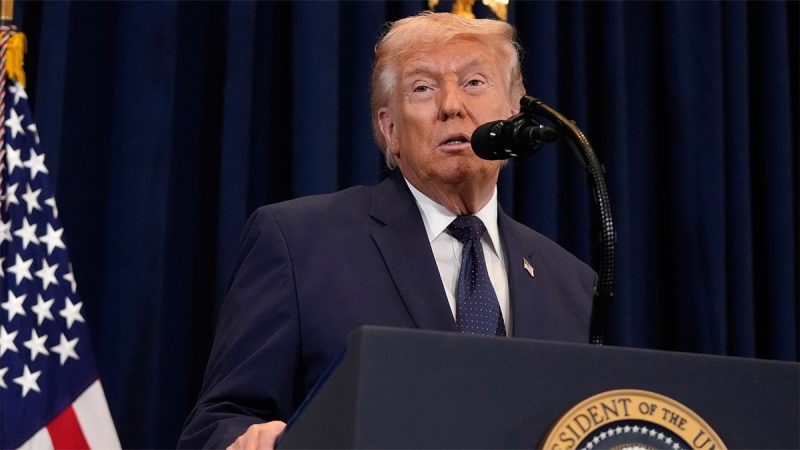
‘Very soon,’ Trump said at a news conference Monday, when asked when the strikes would end. ‘Look, everything they have is gone, including their leadership.’
And the president described the operation as an ‘excursion.’
Quinnipiac University Polling Analyst Peter Malloy noted that ‘perhaps compelled by memories of long wars, Americans see no early end to the enormous upheaval in the Middle East.’
Trump recently dismissed the polling on Iran, telling the New York Post March 2: ‘I don’t care about polling. I have to do the right thing. I have to do the right thing. This should have been done a long time ago.’
Trump’s overall approval rating stood at 37% in the Quinnipiac poll, with 57% giving the president a thumbs down on the job he’s doing in the White House.
The president stood at 43% approval in the Fox News poll, and at 44% in the NBC News survey. An average of the latest national surveys that gauged the president’s performance put Trump at 43% approval and 54% disapproval.